Tuesday, March 30, 2010

You have questions?

by Rob Bralow, Wine Post Editor


I get some funny pitch e-mails every so ofter, from people who want me to mention their product on my blog. I do not, it is what I used to do and hope to do again in the future when I am once again employed. One from Ask.com caught my eye because of how funny the answers could be.


Evidently there are thousands of questions about wine that are asked regularly. And Ask.com records all of them. If you think that every single keystroke you make is not recorded somewhere, you are kidding youself. The people at Ask.com looked through their database of what people have typed in and come up with their top 10 questions that people ask on Ask. I have included my own answers, although there were different, perhaps better (who is to say for sure) answers included in the e-mail I received.


1. How many calories are in a glass of wine?
Depends how big the glass is, but then you have to ask yourself, why are you eating glass...
2. How do I make wine?
Ask a winemaker, I just drink the stuff.
3. What is port wine?
Delicious.
4. How many bottles of wine are in a case?
Traditionally 12, but I can stuff closer to 15 in one of those babies.
5. What is Marsala wine?
Wine from Marsala. You see, wasn't that helpful?
6. What wine goes best with chicken?
Twisted Oak. Although maybe that's just rubber chickens... still need to get me one of those.
7. Who is the god of wine?
The one that brings me the most bottles... or Dionysus, whichever!
8. How long does wine last once opened?
Fifteen minutes to an hour. If I am really thirsty, not even that long.
9. How do I remove red wine spills from carpet?
WHAT ARE YOU DOING SPILLING THE WINE?!
10. What is the best way to open a bottle of wine?
This way: Smash!
Source:  Ask.com


How often do you find yourself asking these questions?

Monday, March 29, 2010

Quick Taste: Bluecoat

by Rob Bralow, Wine Post Editor

Gin and Tonic is one of my go-to drinks. It is easy, everyone knows it, and usually a bar will have a few different types of gin, so I will not be stuck with the well gin which might make me regret coming into the bar in the first place. New York City especially is a great place to find many different gins. I found a great gin in Oxley and had my friend Eric Feldman taste it and write up an appropriate review, which he went above and beyond the call of duty to do.

Then along came the Bluecoat Gin. It is five-times distilled in my hometown, Philadelphia. This gin is distilled by Robert Cassel for Philadelphia Distilling, using organic juniper berries and American citrus peels and other organic botanical elements.  It is distilled in a custom-built, hand hammered copper pot still. I do not think that Philly is known for its Gin (or its copper pot stills for that matter), but if Mr. Cassel were to make more of this and find wider distribution, it might give cheese-steaks a run for the money.

I'll have "one, with, whiz" please.


Friday, March 26, 2010

A Lunch with Ruffino

by Rob Bralow, Wine Post Editor


I have decided that I love Spring. This is the time of year when every winemaker and their brother comes into town. I sometimes get jealous of all the bloggers in California that can go out to wine country every weekend to meet winemakers, taste their wines, and do so with a group of other wine geeks. In New York, the wine country is both father away and not nearly as attractive as the wineries near San Francisco (although I have been hearing great things about wine being made in Brooklyn).


This past Monday, I attended a tasting at the International Culinary Center (ICC) of wines from Ruffino. This company, founded in 1877 by Ilario and Leopoldo Ruffino and purchased by the Folonari family in 1913, makes some of the finest wines from Italy. Adolfo Folonari, the CEO of the company came to New York to talk to some of the most important wine writers and journalists that have been in the business for several of the past few decades. I have no idea how I wrangled an invitation.

Along with the wines from Ruffino, we had the pleasure of having Cesare Casella, a renowned Italian Chef, give us a taste of Italy. Casella has run many successful restaurants in New York, and is currently the Dean of the Italian Culinary Academy at the ICC. Casella most recently opened Salumeria Rosi (www.salumeriarosi.com) on Manhattan’s Upper West Side, a shop and restaurant with a focus on premium Italian salumi (yes, I spelled that right). With seven types of salumi to taste and a delicious meal prepared by students of the ICC, it was a delicious rainy afternoon.

Have you ever seen two Italians (I mean real Italians, direct from Italy) talk about food? It is like watching two professors discuss their favorite topic to someone who takes an opposing view. With arm waving to match the conductor of the New York Philharmonic. There has to be a thought of how the food was grown, where the pigs were housed, what they ate, how long the smoking took, which village has the best atmosphere, etc. On Facebook one of my friends said, "They were probably actually talking about sex." I loved every minute of it.

Speaking of Facebook, between the journalists there was a lot of banter regarding how often one of them posts status updates and comments. This really highlighted for me how far behind the people in the room really were in today's world of social communication. The room was filled with people for whom I have the utmost respect. Their wine savvy is unquestionable, their contribution to the wine industry immense, and their connections to the most powerful winemakers and import companies could change the course of the market. One of their number was learning how social media works, checking out how to use Facebook. I know one or two of them are on Twitter, but they do not really interact with people there. They did it to see what it is all about. I applaud their efforts and I encourage them to keep going. Read the blogs just as often as the newspapers. Put the wine reviewing site on the radar. Add an RSS feed or two to an RSS Feed Reader. If that is all gibberish, read about it on Wikipedia.

Now that I got that out of my system, I can turn back to the wines. My favorites of the tasting were:

2009 Ruffino Lumina Pinot Grigio Venezia Giulia IGT - Bright and creamy, with very nice hints of lemon. This wine had flavor and body, something I find lacking in so many Pinot Grigio's. The group also loved this wine and for $10 it's a steal.

2004 Ruffino Greppone Mazzi Brunello di Montalcino DOCG - Delicate, with slight cedar wood notes, blackberry and a pleasant heat on the nose. Rich and fruity with soft spices, a heap of cinnamon, and a liveliness that gives the wine energy and a strong desire for food.

2001 Ruffino Riserva Ducale Oro Chianti Classico Riserva DOCG - A smooth wine, deep dark fruit, but with a solid base of structure and bright acidity and a chocolate finish. This is a big wine that has done well for nine years and I think would love some more time to sit.

Tuesday, March 23, 2010

World Cup Wine

by Rob Bralow, Wine Post Editor


Most wineries wish they could say that their wine was world cup material. Nederburg can claim this honor as being the official wine for the 2010 World Cup in South Africa. This is not actually a very interesting claim because it usually means that Nederburg paid for the honor. What makes this more interesting is the focus on South Africa that the 2010 World Cup brings.

Tariro Masayati, is a black Zimbabwean. Tariro grew up extremely poor in Zimbabwe, a country torn by war and political conflict, but he went on to study viticulture and oenology first at the University of Zimbabwe and then at the University of Stellenbosch - a career path not at all common amongst black Zimbabweans. Tariro, the Shona word for hope, is responsible for making white wine for Nederburg in South Africa, the viticultural capital of the African continent. He has succeeded in the face of adversity throughout his entire life and in many ways represents hope that a new South Africa is not only possible but probable.

And the wines are solid! Not amazing, but quite drinkable. Nederburg created three Limited Edition "twenty 10" wines for the 2010 World Cup:


2009 Sauvignon Blanc - Fresh gooseberry, grapefruit, kiwi, with a slightly herbal but pleasant background on the nose. The taste started with lemon rind, a little creamy in the midpalate, but some ripping acid.

2009 Dry Rosé - This rosé is 100% Cabernet Sauvignon. There were lots of light raspberries and rose petals on the nose. The taste was a little harsh, with some extreme acid but mellowed into raspberry and cherry fruits.


2008 Cabernet Sauvignon - Best of the bunch, with rich and fleshy blueberry on the nose. There was none of the "burnt tire" smell that I have found in other South African wines. The taste was fleshy and fruity, with enough tannin and acid to make me want some food to go with it.

Stories like this are fantastic. It is even better when they are true and happen at a time when the rest of the world is looking at the country with a microscope.


Monday, March 22, 2010

A Bitter World

by Rob Bralow, Wine Post Editor

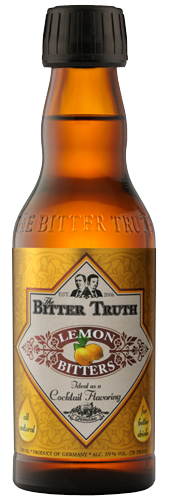
In today's world, there are a lot of bitter truths.Therefore it becomes strange when something so bitter makes the world better. I am talking about The Bitter Truth's bitters, a group of ingredients that transform the sickly sweet cocktail into a balanced and refreshing beverage. Bitters are a highly alcoholic herbal flavored liquor, used as a digestif or cocktail ingredient.

Celery Bitters: It does not sound the most appetizing, in fact I am not particularly enthusiastic about celery in general, however I found this to add a nice herbal note to a drink.

Lemon Bitters: Like putting lemon fresh on a dinning room table, this bitter not only gives the necessary balance to a sweet drink, but also adds a bit of freshness.

Orange Bitters: There is something about slipping a slice of orange peel into a drink. You see it in a lot of upscale lounges and bars, so there is definitely some cache. But there is no denying that orange freshness can be the perfect complement to a drink.

Bittermens Grapefruit Bitters: To get this taste right, The Bitter Truth partnered with Bittermens Inc. to create this bitter. This was more of a mineral taste, something to go well with gin.

Bittermens Xocolatl Mole Bitters: So the note above RE: Bittermens. There must be some kind of higher power to understand that I need chocolate in every form. This bitter pulls in the cocoa notes perfectly, complementing a dark rum drink.

Thanks to The Bitter Truth for the samples and for the use of the image of their product.

 
Copyright 2009 Wine Post: Wine & Spirits Blog. Powered by Blogger Blogger Templates create by Deluxe Templates. WP by Masterplan